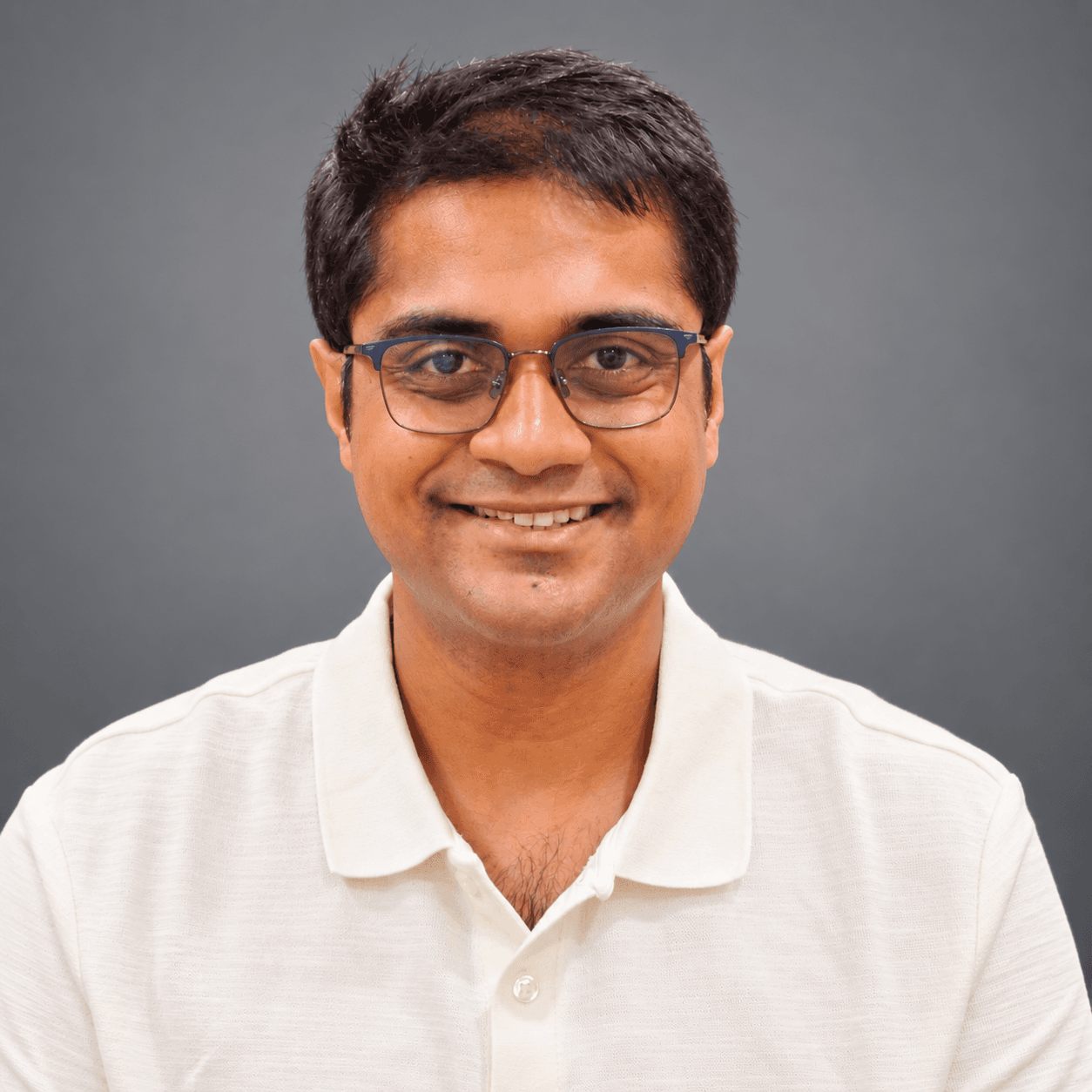
About Vishakh Vittal Shendige
I build reliable and sustainable AI workflow systems that make professionals more productive without losing their judgment.
Founder of Infinity AI. Three years of hands-on AI workflow and adoption programmes delivered to more than 1,000 professionals across India, North America, the UK and Germany, from C-suite executives to functional managers and operational teams, with curricula differentiated by role and built for measurable behavioural change rather than comprehension. Author of six practitioner books on LLMs, prompt engineering and AI workflow systems, including *Mastering Microsoft Copilot* and *Mastering ChatGPT for Professionals*, read across thirteen Amazon marketplaces.
Across that delivery, I kept watching the same pattern. People get fluent with AI tools quickly, and almost nobody redesigns the structure underneath their work to match. The tools change. The week stays exactly as fragmented as it was. What looks like a training gap is usually a design gap. Which led to the question my work now centres on: not whether a team is allowed to use AI, but whether this specific task, right now, should be handed to it at all.
Three frameworks came out of that work, each built, taught, broken under real operating pressure and rebuilt.
1. The Judgment Sovereignty Matrix places any task in one of four zones using two questions, assigning both the level of AI involvement and who owns the outcome. It gives teams a defensible answer to what AI is permitted to decide.
2. Analytical atrophy names what that boundary protects: the slow erosion of independent judgment when delegating to AI becomes an unexamined default. No single delegation causes it. The loop does.
3. The Week 6 collapse is the point where new AI practices reliably break under operating pressure. It is a design failure rather than a motivational one, with five fixes that have to be built in before the pressure arrives.
Before this, engineering research at RWTH Aachen University, where the discipline was to validate a system under real conditions before trusting it. That habit shows up directly in how I design workflow architecture now, and in *Decision by Design*, the book these frameworks sit inside.
I speak on AI adoption, workflow design, judgment boundaries, human-in-the-loop governance and responsible AI use, for audiences who want a structured answer rather than another tool tour.
1 talk at AI Community Days1 city
Speak at AICD
Your talk could be next.
Every AI Community Day opens its own call for speakers. See which calls are open and how speaking at AICD works.